What Causes Green Algae Streaks on Roof Tiles?
Run a hand along a green-tinged tile after rain and it feels slightly slick, almost slimy. That film is algae, and on many Sussex roofs it shows up as pale green streaks that trail down the slope like watermarks. It looks like dirt, but it is very much alive, and it behaves quite differently from the black stains or spongy moss cushions that appear on the same roofs.
Knowing what those green streaks actually are makes it much easier to deal with them properly. This guide explains what causes algae on roof tiles, why the streaks run the way they do, and how the growth is removed without harming the roof.
Algae Is a Living Film, Not Surface Dirt
Algae are simple organisms that spread through microscopic spores carried on the wind and, in coastal areas, on humid air. When those spores land on a surface that stays reliably damp, they begin to grow into a thin film. Unlike moss, which forms raised, spongy clumps you can lift with a finger, algae cling flat to the tile as a slick green or greenish-black layer.
Because it grows as a film rather than a mound, algae can cover a large area of roof before a homeowner really notices it. From ground level it reads as a general dullness or discolouration across the slope, and only up close does the living, slightly slimy nature of it become clear. That flat growth habit is also why algae responds well to gentle, water-based cleaning rather than aggressive scraping.
Why the Streaks Run Downward
The streaked pattern is one of the most recognisable signs of roof algae, and it has a simple cause. Rainwater runs down the slope, and as it moves it carries algae spores and the nutrients they feed on with it. Wherever that water lingers, along a shallow section, beneath a ridge, around a chimney, the algae find enough moisture to establish, and the growth spreads in the direction the water flows.
The result is vertical streaking that follows the path of the runoff. On many roofs the streaks begin beneath features that shed concentrated water, such as chimney stacks, vents, or the joints where two slopes meet. Once a streak forms, it tends to widen over successive wet seasons as more spores travel the same route.
What Feeds Algae on a Roof
Three things drive algae growth, and all three are common on Sussex roofs.
Constant moisture. Algae need surfaces that stay wet. The South East's frequent rain, humid coastal air, and long damp autumns keep many roofs moist for days at a time, which is exactly what algae need to spread.
Shade. As with moss, shaded slopes dry slowly and shelter algae from the drying, ultraviolet effect of direct sun. North-facing sections and areas under tree cover almost always show the heaviest green film.
Minerals in the tile. Some tiles, particularly those manufactured with mineral content in the surface, provide trace nutrients that certain algae feed on. Combined with organic debris washed across the roof, this gives the film a steady food supply.
Debris collecting along the roofline adds to all of this, holding moisture and feeding growth from the edges inward. Keeping the roofline clear with regular
Gutter Cleaning removes much of the organic matter that helps algae get started.
If the green on your roof is flat, slick, and streaky, it is most likely algae. If it is raised, spongy, and cushion-like, it is moss. Roofs often carry both at once, which is why a single clean usually needs to tackle more than one type of growth.
Is Green Algae Damaging the Roof?
Algae is less physically destructive than moss because it does not form the water-holding mounds that lift tiles and block gutters. Its main effects in the short term are cosmetic: a dull, streaked, aged appearance that can make an otherwise sound roof look neglected and reduce a property's kerb appeal.
Over longer periods, though, a persistent damp film is not harmless. It keeps the tile surface wetter than it would otherwise be, and that sustained moisture can contribute to slower surface wear. Algae also frequently appears alongside moss and lichen, and the combined growth accelerates the overall decline of the roof surface. Treating the green film early keeps the roof both cleaner in appearance and drier underneath.
How Green Algae Streaks Are Removed Safely
The temptation is to reach for a pressure washer, but high pressure is one of the worst things you can do to a tiled roof. It can strip the protective surface, drive water beneath the tiles, and dislodge bedding on ridges and hips. Because algae grows as a flat film, it does not need that kind of force to remove.
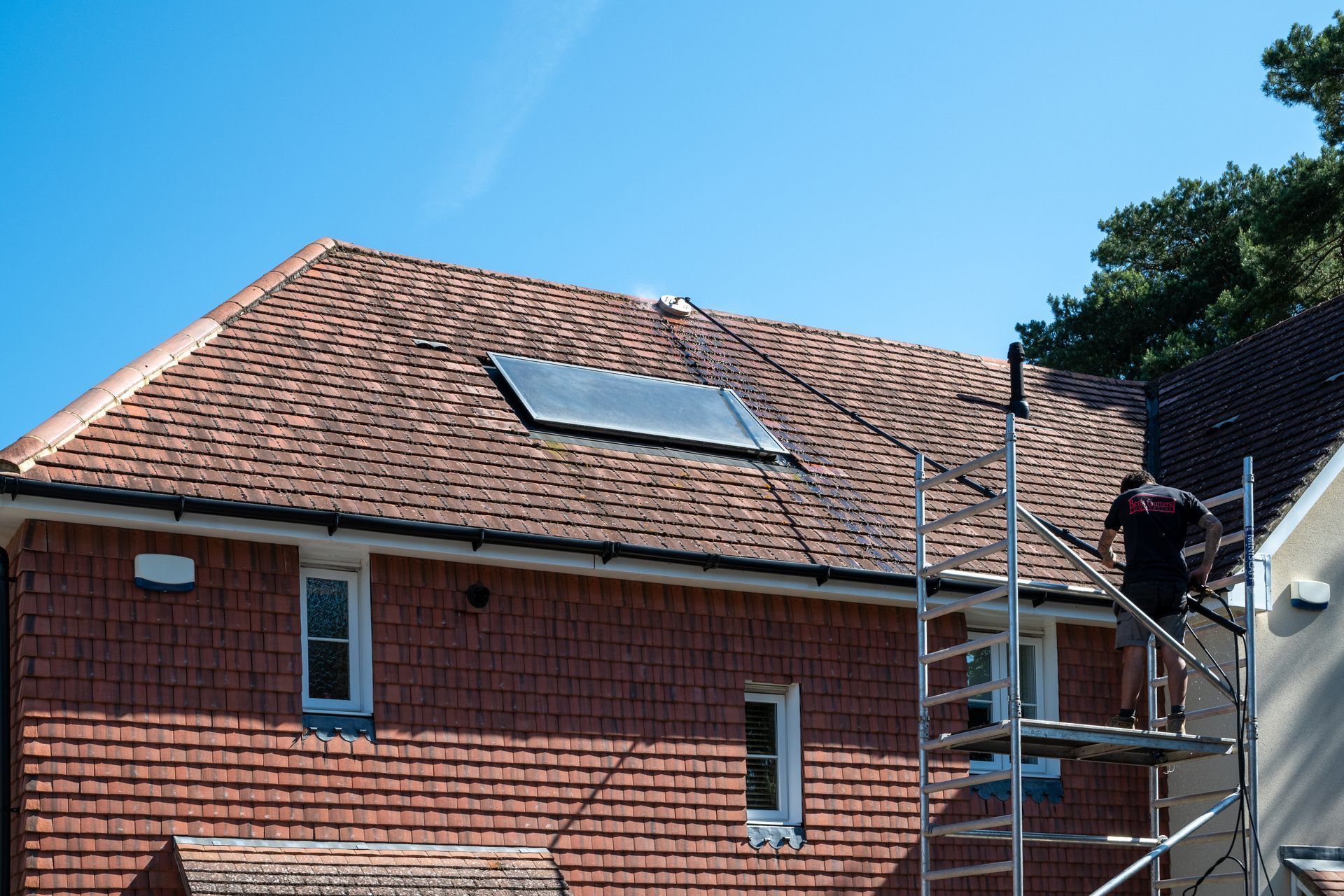
A no-contact, water-based method lifts the algae film from the tiles working from mobile scaffold towers or ground level, without walking the roof or blasting the surface. The roof is inspected first and a patch test carried out so the approach suits the tile type. Once the film is cleared, a non-toxic biocide can be applied that keeps working on the surface over the following months, slowing the return of algae, moss, and lichen. A gentle Professional Roof Cleaning Services approach paired with biocide gives a far longer-lasting result than a one-off blast.
In our 15 years on Sussex roofs, algae is one of the most common calls we take, precisely because the damp regional climate suits it so well.
Walk to the far side of the road and look at your roof from a distance twice a year, once in early spring and once in autumn. Moss shows up as darker, textured patches on the shaded slopes long before it is visible up close, and spotting it early makes cleaning far simpler.
Green algae streaks on roof tiles are caused by airborne algae spores that settle on damp, shaded surfaces and multiply into a thin green film. Algae thrive on moisture and the mineral content of the tiles, spreading fastest on north-facing slopes and areas shaded by trees. The streaks often run downward because rainwater carries spores and nutrients down the slope. Cleaning removes the film, and a biocide treatment slows its return.
Frequently Asked Questions
Are green algae streaks the same as black roof stains?
Not quite, though they are related. Green streaks are typically algae growing as a living film, while the dark, almost black staining seen on many roofs is usually a different organism that produces a dark protective pigment. Both thrive in damp, shaded conditions and often appear on the same roof, and both are removed by the same gentle cleaning process.
Will the algae come back after cleaning?
It can, because cleaning does not remove the spores in the surrounding air or change the shade and dampness that let algae grow. Applying a non-toxic biocide after cleaning slows the return considerably, and keeping gutters clear and branches cut back helps the roof dry faster between rains.
Can I remove roof algae myself with bleach?
Homemade bleach or chemical mixes are risky. They can damage tiles, harm surrounding plants and lawns, run off into drains, and rarely reach the algae evenly across a full slope. Working at height on a wet, slippery roof is also dangerous. A professional water-based method removes the film safely without those risks.
Does algae make a roof slippery or unsafe to walk on?
Yes. A damp algae film makes tiles genuinely slick, which is one reason walking an affected roof is hazardous. This is a key advantage of no-contact cleaning, where the roof surface is treated from towers or the ground rather than by anyone standing on the slippery tiles.
How often should algae-prone roofs be cleaned?
It depends on shade, tree cover, and tile type, but many damp, shaded Sussex roofs benefit from cleaning every few years. A biocide treatment stretches that interval, and a quick visual check each spring and autumn will tell you whether the green film is returning.
Clear green algae from your tiles Book a no-contact roof clean that lifts the algae film without pressure washing. Ben's Roof Cleaning includes a free inspection and patch test, with optional biocide to slow regrowth. Call 01342 778892.
Keeping Your Tiles Green-Free
Green algae streaks are a sign that your roof is staying damp long enough for a living film to take hold. The streaks follow the water, the growth follows the shade, and the Sussex climate supplies plenty of both. Removing the film with a gentle, water-based clean and following up with a preventative treatment addresses the appearance and the underlying dampness together, so your tiles stay clearer for far longer than a quick surface wash would manage.